

Section 4 - Alberta NAWMP Partnership
Science Stories
Learn more about some of the projects funded by the Alberta NAWMP Partnership.
Science-based advances for targeted, impactful conservation
The Canadian Prairie Pothole Region is a crucial landscape for breeding waterfowl in North America. This region is a major focus for the wetland and waterfowl conservation work of the Prairie Habitat Joint Venture (PHJV) and its partner organizations like Ducks Unlimited Canada. Now, scientists at Ducks Unlimited Canada are leading a collaborative project to update two of the PHJV’s key tools for conservation planning and evaluation in this region. The updates will help ensure that the PHJV’s conservation activities in the region will continue to be scientifically robust, targeted, effective, and accountable to funders and supporters.
Science Matters. Through our Science Fund, the Alberta NAWMP Partnership supports research towards achieving our vision of maintaining healthy prairie, parkland and boreal landscapes that support sustainable bird populations and provide ecological and economic benefits to society.
We are grateful to everyone who contributes to this work and for their willingness to enable us to profile their research through our Science Stories Series. For additional Science Stories, visit https://abnawmp.ca/science/#science-stories. For further information regarding their work, contact the researchers directly or email the Alberta NAWMP Partnership Coordinator.
Lasting benefits from short-term conservation agreements
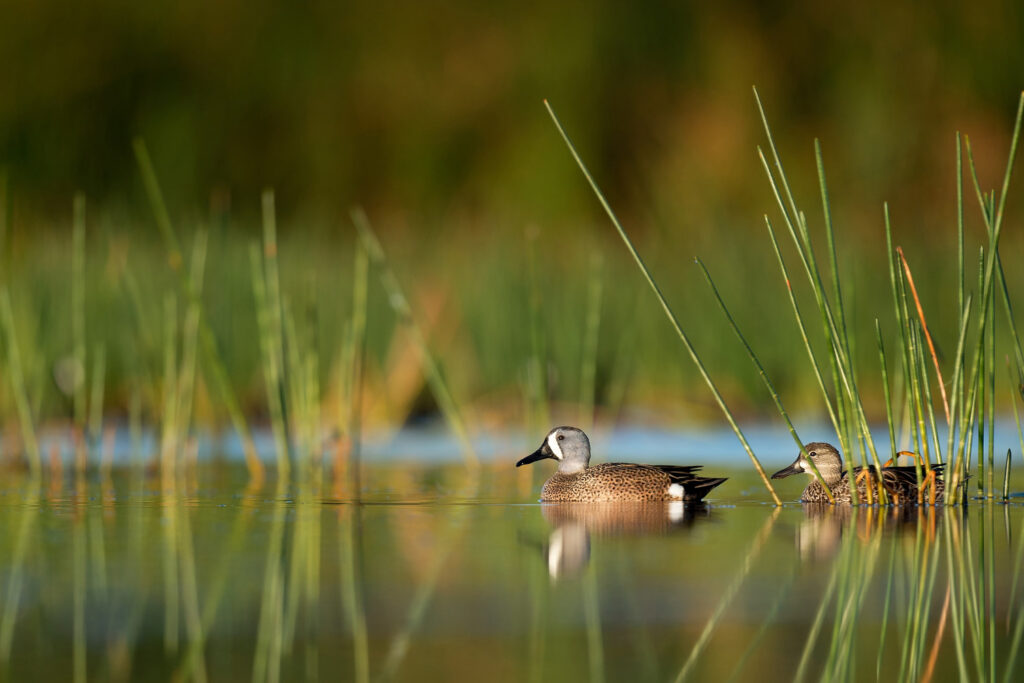
The Prairie Pothole Region, which includes parts of Alberta, Saskatchewan and Manitoba as well as some U.S. states, is the most important landscape for breeding ducks in North America. This region is also strongly agricultural, and most of the land is privately owned. That’s why Ducks Unlimited Canada (DUC) offers a suite of landowner programs, allowing Prairie farmers to find conservation options that work for their own agricultural operation. These programs include options to protect habitat in perpetuity as well as short-term agreements. Many producers prefer the flexibility of a short-term agreement, and research shows that the such agreements can provide habitat benefits during the agreement period. But what about benefits beyond that? DUC’s Lauren Bortolotti and Carleton University’s Joe Bennett and Tim Alamenciak are collaborating on a study to assess the longer lasting, multifaceted benefits of such short-term agreements as part of overall conservation strategies for Prairie agricultural landscapes.
Science Matters. Through our Science Fund, the Alberta NAWMP Partnership supports research towards achieving our vision of maintaining healthy prairie, parkland and boreal landscapes that support sustainable bird populations and provide ecological and economic benefits to society.
We are grateful to everyone who contributes to this work and for their willingness to enable us to profile their research through our Science Stories Series. For additional Science Stories, scroll down the page. For further information regarding their work, contact the researchers directly or email the Alberta NAWMP Partnership Coordinator.
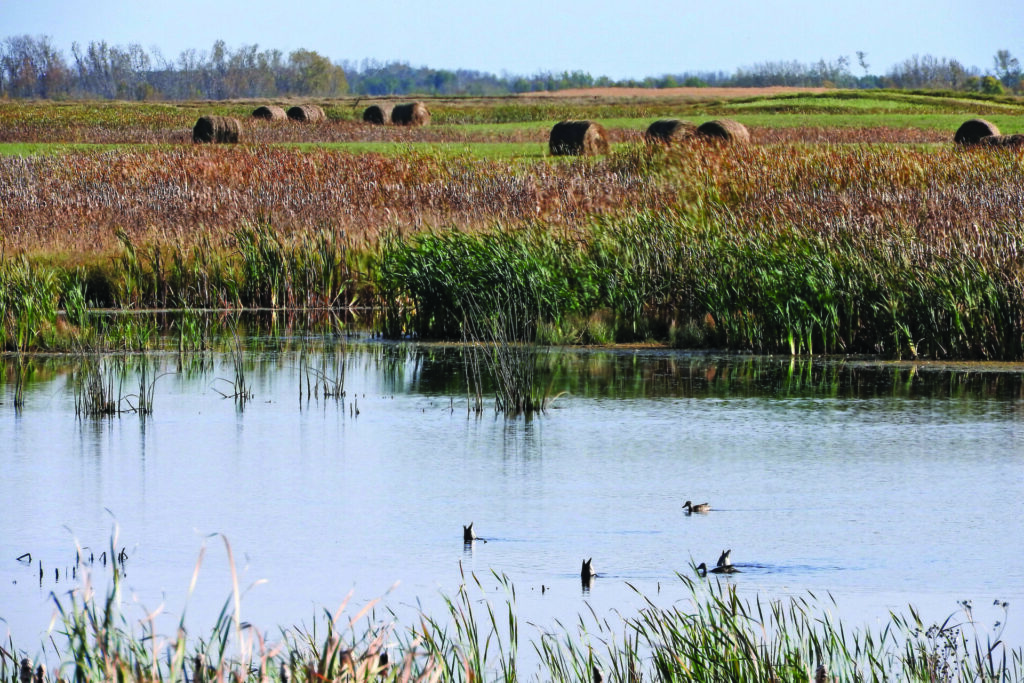
Agricultural landowners are key partners in Prairie habitat conservation, so Ducks Unlimited Canada offers a suite of landowner programs including options for short-term conservation agreements. Credit: Ducks Unlimited Canada
What drives upland sandpiper population trends?
Each spring, upland sandpipers migrate from South America to a large portion of Canada and the United States for breeding. Intriguingly, this bird’s breeding population patterns are complex, with varying trends across their range. Prairie conservationists have a keen interest in gaining a deeper understanding of landscape factors driving these varied trends. This understanding is important not only for conserving this grassland shorebird itself, but also other midcontinental shorebirds and grassland birds who share the same landscapes. Overall, the breeding populations of shorebirds and of grassland birds have dramatically declined in North America in recent decades. To help fill the gap in understanding, Andres Rosales, a University of Saskatchewan MSc student, conducted a study to analyze land cover changes – especially the conversion of grasslands to agricultural crops – as a potential driver of the upland sandpiper’s local breeding population trends. His study was guided by Environment and Climate Change Canada’s Dr. Kirsty Gurney and Dr. Ann McKellar.
View article >>
Delving into the human dimensions of bird habitat conservation
This recent study, led by the University of Alberta’s Dr. Howie Harshaw and Dr. Katherine Sainsbury, provides a fascinating look at Canadians’ willingness to pay for bird habitat conservation. Although NAWMP itself does not solicit donations, asking about people’s willingness to pay for the things that NAWMP does is a useful way to assess the level of support for NAWMP’s activities. In this survey of over 2300 Canadians, about one-third of participants were willing to make a one-time donation to NAWMP to protect and conserve bird habitats. This finding establishes that many Canadians support the activities of NAWMP. Other findings from the survey identify what types of conservation actions people would prefer to support and other useful information to help guide development of NAWMP’s programs and outreach activities. Learn more >>
Science Matters. Through our Science Fund, the Alberta NAWMP Partnership supports research towards achieving our vision of maintaining healthy prairie, parkland and boreal landscapes that support sustainable bird populations and provide ecological and economic benefits to society.
We are grateful to everyone who contributes to this work and for their willingness to enable us to profile their research through our Science Stories Series. For additional Science Stories, visit https://abnawmp.ca/science/#science-stories. For further information regarding their work, contact the researchers directly or email the Alberta NAWMP Partnership Coordinator.
A successful test run of a cool new conservation planning tool
A 2023 pilot project showed that a new conservation planning tool, called Where To Work, is effective, fast and user-friendly. The tool prioritizes where in a landscape to deploy conservation efforts for maximum effect. Learn more >>
At the leading edge of waterfowl ecology
Dr. Mitch Weegman, his collaborators and his students are in the vanguard of research in waterfowl ecology and statistical ecology. Their work aims to help foster sustainable, resilient waterfowl populations in our changing world. Learn more >>
Blending Science and Traditional Values
Wetlands are a vital part of the diverse landscapes of the Blood Reserve in southern Alberta. The Blood Tribe Land Management (BTLM) is working on an inventory of these wetlands to guide their community-based wetland conservation efforts. Learn more >>
Wetlands and Crop Yields
The perception that we hear often from agricultural producers is that draining a wetland produces an economic benefit because you create an area where you can now grow crops. But is there actually an economic benefit to the practice of draining and cultivating a wetland in a crop field? Learn what researchers discovered >>
Tracking Pintails
Exactly where a northern pintail duck places her nest has a big impact on her nesting success. If she chooses the wrong spot, all her eggs could be destroyed. And pintails really need better nesting success. In this project, researchers tracked pintails to help target conservation efforts. Learn more >>
The Human Dimension of Wetland Conservation
Waterfowl hunters are key supporters of waterfowl and wetland conservation. But the number of waterfowlers in North America has seriously declined since the late 1970s. This decline is hampering conservation efforts in many regions, including Alberta. To better understand and address this issue, a project is diving into the human dimension of waterfowl hunting in Alberta. Learn more >>
Cattle, Carbon and Wetlands Go Hand in Hand
The perennial plants that blanket well-managed grazing landscapes do much more than provide forage for livestock. They store carbon in the soil, provide wildlife habitat, maintain biodiversity, prevent soil and nutrients from being carried away by wind and water, and protect watershed health. Learn more >>